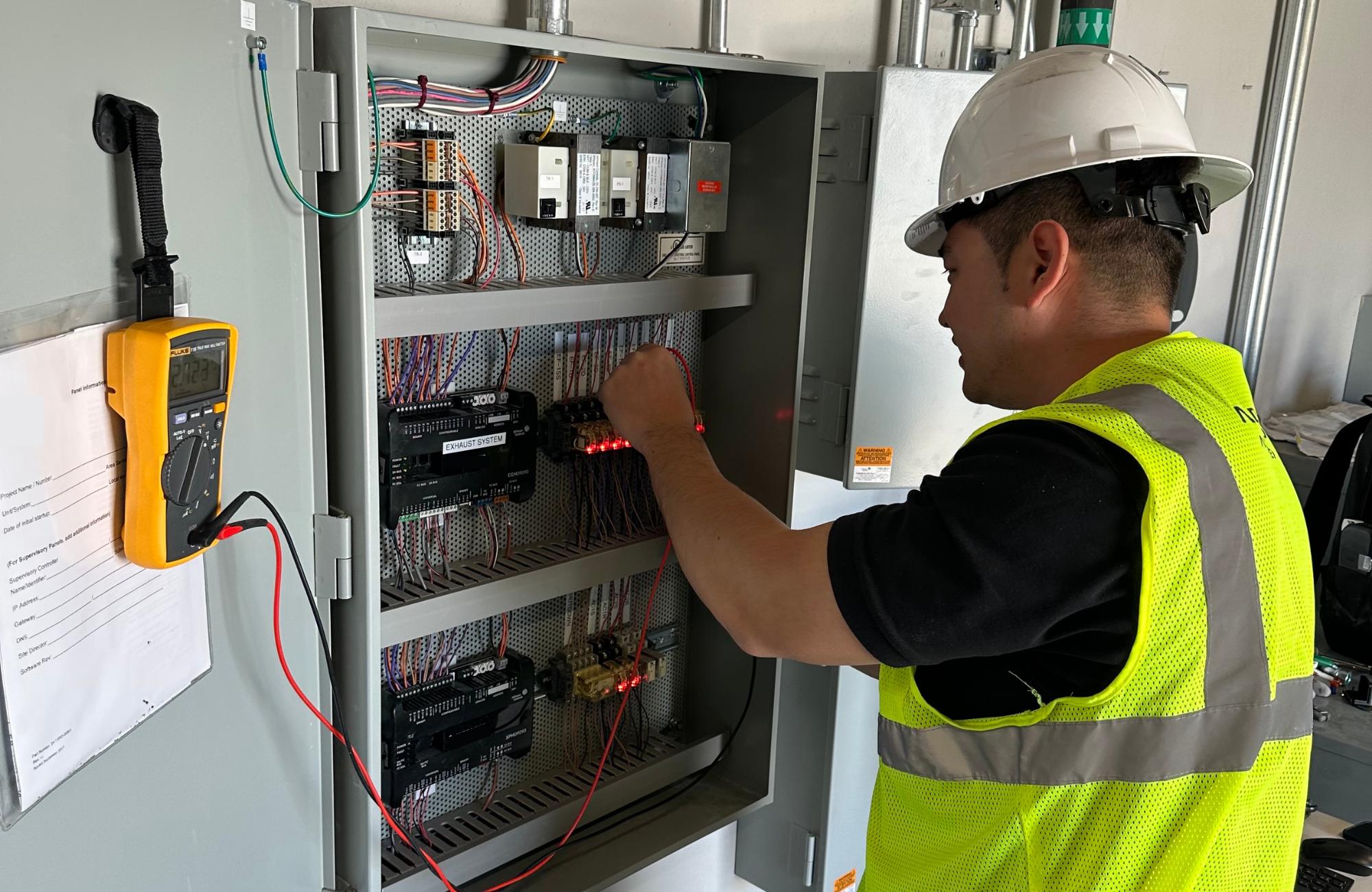
The typical day in the life of a facilities team member rarely goes according to plan. Instead of focusing on critical priorities and tasks, facilities staff often spend the brunt of their time addressing service calls, occupant complaints, system alerts, and nuisance alarms — running from one fire to another to stomp them out. Their days become a series of unplanned reactive responses, leaving them little time to focus on optimizing building performance.
Ideally, Building Management Systems (BMS) are designed to help facilities departments do their jobs more efficiently and productively. But the reality is, building systems that comprise a BMS are typically maintained only when issues pop up. The result of this reactive approach is wasted energy, increased costs, and compromised performance. Indeed, industry benchmarks show that reactive maintenance costs 3 to 5 times more than preventive maintenance, taking into consideration labor, materials, and impact on operations.1
Why Facilities Rely on Reactive Maintenance
Given the risks around reactive maintenance, why do facilities departments continue taking this firefighting approach? It’s worth taking time to understand the reasons.
Overwhelmed and Understaffed
Day-to-day operational demands are relentless, and many facilities teams find themselves tasked with improving building performance while addressing urgent issues with limited internal resources. Putting out fires often takes priority over system optimization.
Complex, Fragmented Systems
BMS platforms are often comprised of a complex blend of fragmented and disparate systems, including legacy equipment. This can make it harder for facilities to access accurate data about system performance. As a result, maintenance becomes more event-driven and less planned.
Budget Considerations
When capital expenditures are under scrutiny, there’s often a prevailing attitude of “if it’s running, it’s fine.” This approach, however, doesn’t account for costs related to energy waste, emergency repairs, and shortened equipment life.
Unnoticed Issues
When it comes to BMS maintenance, many issues can slip past the facilities team unnoticed. That’s because, unlike mechanical failures, building system inefficiencies often develop gradually over time. Take sensor drift, for example. A temperature sensor that’s off by just a few degrees may not trigger an alarm but can still cause systems to overheat or overcool spaces, wasting energy and escalating costs.
Alarm Fatigue
Systems that generate excessive or poorly configured alerts and nuisance alarms run the risk of alarm fatigue. Facilities staff may end up becoming desensitized and ignoring critical warnings that indicate real issues that have a serious impact.
The Hidden Risks of Reactive Maintenance
While often the norm, reactive maintenance comes with a host of risks that erode building performance, increase long-term costs, and make it harder for facilities teams to do their jobs. Let’s break those risks down.
Energy Waste
When facilities teams spend their days reacting to issues, they don’t have the time to make sure sensors are properly calibrated, schedules are optimized, control loops are tuned, setpoints aren’t drifting, and other planned maintenance tasks. This opens the door for significant energy waste that drives costs up over time.
Cost Creep
Emergency repairs, expedited part orders, after-hours labor, service calls from outside vendors: all these costs add up, making it more difficult to stick to budgets. Without a predictable maintenance plan, facilities teams are forced into a cycle of unplanned spending that often gets out of hand.
Asset Devaluation
With a reactive maintenance approach, equipment degrades faster. Components that aren’t regularly inspected or fine-tuned operate under increased stress and unfavorable conditions, reducing their lifespan and overall asset value. Deferred maintenance often results in extra unexpected capital replacements.
Cybersecurity Exposure
Software and platform often go neglected in a reactive maintenance approach. Unpatched software, outdated firmware, and unsecured network connections create vulnerabilities that can be exploited by cyberthreats. These risks are often overlooked until a breach or audit forces action.
Occupant Complaints
When spaces are too cold, hot, or stuffy, when lights aren’t working properly, when air quality is poor, when elevators don’t function—occupants aren’t happy. Satisfaction, productivity, and retention plummet. And facilities wind up spending their time responding to complaints instead of optimizing performance.
Data Gaps
Data integrity also suffers when systems aren’t maintained regularly and strategically. Faulty sensors, missing data points, and misconfigured integrations undermine the reliability of analytics and reporting. Poor data quality leads to poor decisions, which in turn limits the value of BMS investments.
Safety Risks
When equipment, alarms, and control sequences don’t function as intended, these failures can put the safety of occupants and facilities staff at risk. Aging and poorly maintained equipment can lead to fire hazards. Neglected HVAC units can impact occupant health. Emergency systems may fail during incidents. Undetected leaks can lead to slips and falls. Reactive maintenance may not catch and correct all these safety issues.
Productivity Declines
Time spent troubleshooting preventable issues and putting out fires eats into facilities teams’ productivity. Instead of focusing on strategies that drive efficiencies and performance, staff find themselves running from one issue to the next.
So what’s the alternative to reactive maintenance that comes with increased risk? Taking a more proactive approach.
Shifting Away from Reactive Maintenance
Shifting a facilities department’s maintenance approach often requires a shift in mindset as well. The first step in recalibrating is to understand the different types of maintenance strategies that can lead to improved outcomes: preventive, predictive, and proactive.
Preventive Maintenance
This type of routine maintenance includes regularly scheduled tasks, such as equipment inspections, filter replacements, and software updates. Studies show that preventive maintenance can reduce costs by 12-18% and generate a 400% return on investment.2 What’s more, preventive maintenance has been shown to reduce energy usage by 10-20% and improve occupant satisfaction by 15-25%.3
Keep in mind that preventive maintenance assumes that all similar types of assets behave the same way, and doesn’t account for real operating conditions. That’s where predictive and proactive maintenance comes in.
Predictive Maintenance
Predictive maintenance goes a step further than preventive maintenance, leveraging data to anticipate issues before they even happen. Through trend analysis, fault detection, and continuous performance monitoring, teams who take a predictive approach can identify which components are likely to have an issue and when, so they can intervene before the costly and disruptive problem occurs.
The demonstrated benefits are substantial across building systems, and include:
- 5-10 year extended HVAC system life.
- 12-18 months extended asset life.
- 25% extended pump lifespan.
- 12% extended generator lifespan.
- 15% extended compressor lifespan.
- 30% reduction in boiler replacements.
- 19% reduction in motor failure.
- 25-40% reduction in maintenance costs.
- 28% reduction in emergency repair costs.
- 21% reduction in repair time.
- 68% reduction in unplanned downtime.
- 30% reduction in equipment failure.
- 19% increase in asset availability.
- 9% reduction in energy waste.
- 15% improvement in safety.4
Proactive Maintenance
A blend of preventive and predictive approaches that integrates equipment upkeep, software management, and platform optimization, proactive maintenance focuses on continual optimization of system performance. Using failure data, trend analysis, and reliability methods, proactive maintenance addresses root causes of issues and performance degradation, rather than just the symptoms.
In a proactive approach, the BMS isn’t just maintained but actively managed as a dynamic system that evolves with the building’s needs. Studies show that facilities which embrace a proactive maintenance strategy see a 30-50% reduction in downtime.5 And research from Deloitte confirms that proactive maintenance can increase operational productivity by 25%, reduce equipment breakdowns by 70%, and lower overall maintenance costs by 25% compared to a reactive approach.6
Building the Business Case for Proactive Maintenance
For facilities departments seeking to free their staff from reactive mode, a proactive maintenance approach makes good business sense. Beyond keeping systems running and buildings operational, proactive maintenance provides a clear path to increased energy efficiency, reduced costs, improved productivity, and system optimization. Here’s how.
Empowering Facilities
A proactive maintenance approach doesn’t replace facilities staff, but rather empowers them with greater control and visibility. Armed with accurate data, properly functioning systems, and a BMS that actually does what it’s supposed to do, teams can make informed decisions and prioritize their time and resources effectively.
Reduced Total Cost of Ownership
Adopting a proactive approach to maintenance saves money in the long term. By enabling facilities teams to address issues before they disrupt operations, extend equipment life (in some cases, doubling it), reduce energy consumption, and concentrate on higher priority tasks, proactive maintenance ends up lowering both operating and capital expenses.7
Reduced Disruption
Instead of responding to emergency calls and dealing with unplanned downtime, teams can schedule interventions at more optimal times. This reduces disruption as well as labor costs.
Energy Savings
Proactive maintenance often leads to a substantial reduction in energy usage. Teams can proactively optimize schedules, calibrate sensors, and fine-tune control sequences to ensure systems operate efficiently. Findings from one survey revealed that 97% of commercial buildings which adopted proactive maintenance saw positive ROI within the first year, based on energy savings alone.8
Enhance Cybersecurity
Because proactive maintenance encompasses software systems and platforms, this approach ensures regular updates, patch management, and system audits that reduce cyber risks and support compliance requirements.
BMS ROI
Proactive maintenance increases the return on investment for the BMS by ensuring facilities teams are making the most use of BMS capabilities, unlocking its full value to improve system and building performance.
Embracing a Proactive Maintenance Strategy
The success of your proactive maintenance approach relies on how it’s developed and implemented. Here are some guidelines to help you put a strong strategy in place.
1. Create a structured maintenance plan that includes regular system audits, sensor calibration, control sequence verification, schedule and setpoint reviews, software checks, and other key tasks.
2. Make sure data quality management is part of your approach. Regularly validate data streams, look for and correct any anomalies, and make sure your analytics are delivering the accurate, relevant information you need to predict and proactively address potential issues.
3. Include alarm management in your maintenance plan. Identify and prioritize critical alarms to reduce noise and nuisance alarms that lead to fatigue and inaction.
4. Ensure training and documentation is current and complete. Facilities teams should have access to up-to-date systems documents and ongoing training to adapt to evolving technologies and building needs.
5. Partner with an experienced provider. Working with the right outside partner can help you create a plan for transitioning from reactive to proactive maintenance, access the right tools, and train your team.
Moving from Reactive to Strategic
The shift from reactive to proactive BMS maintenance doesn’t happen overnight. But it is doable, and begins with recognizing that building systems are not static assets but rather dynamic, data-driven, and interconnected technologies that require ongoing attention.
For facilities departments tasked with reducing costs, meeting energy efficiency targets, and delivering better outcomes for occupants and stakeholders, a proactive maintenance strategy can make all the difference. If you’re interested in learning more about embracing a more proactive approach, we can help. Reach out to your local Albireo Energy rep today.
Authored with contributions from Tim Wisnieski, Service Manager, Omaha, and Brendan Campbell, Service Manager, Denver
Sources
1. Spedding, Jim. “The ROI of Preventive Maintenance: Why HVAC strategy is a financial imperative.” IFMA. June 15, 2026.
2. “The ROI of Preventive Maintenance: Is It Really Worth It?” Brightly, a Siemens Company. April 21, 2023.
3. Anderson, Logan. “Preventive Maintenance vs. Reactive Maintenance: Costs, ROI & Best Practices.” Re-Leased. May 13, 2026.
4. “Facilities Property Services Maintenance Statistics.” WorldMetrics Report 2026. May 5, 2026.
5. Agoro, Habeeb. “Reducing Downtime in Production Lines Through Proactive Maintenance Strategies.” March, 2025.
6. Schleichert, Olaf et al. “Predictive Maintenance: Taking pro-active measures based on advanced data analytics to predict and avoid machine failure.” Deloitte Analytics Institute. July, 2017.
7. Yang, Li et al. “Preventive Maintenance Strategy Optimization in Manufacturing System Considering Energy Efficiency and Quality Cost.” Energies. November 4, 2022.
8. “Why proactive property management is key to maximizing building performance.” Healthy Workers. October 6, 2025.